
15 Apr 2026
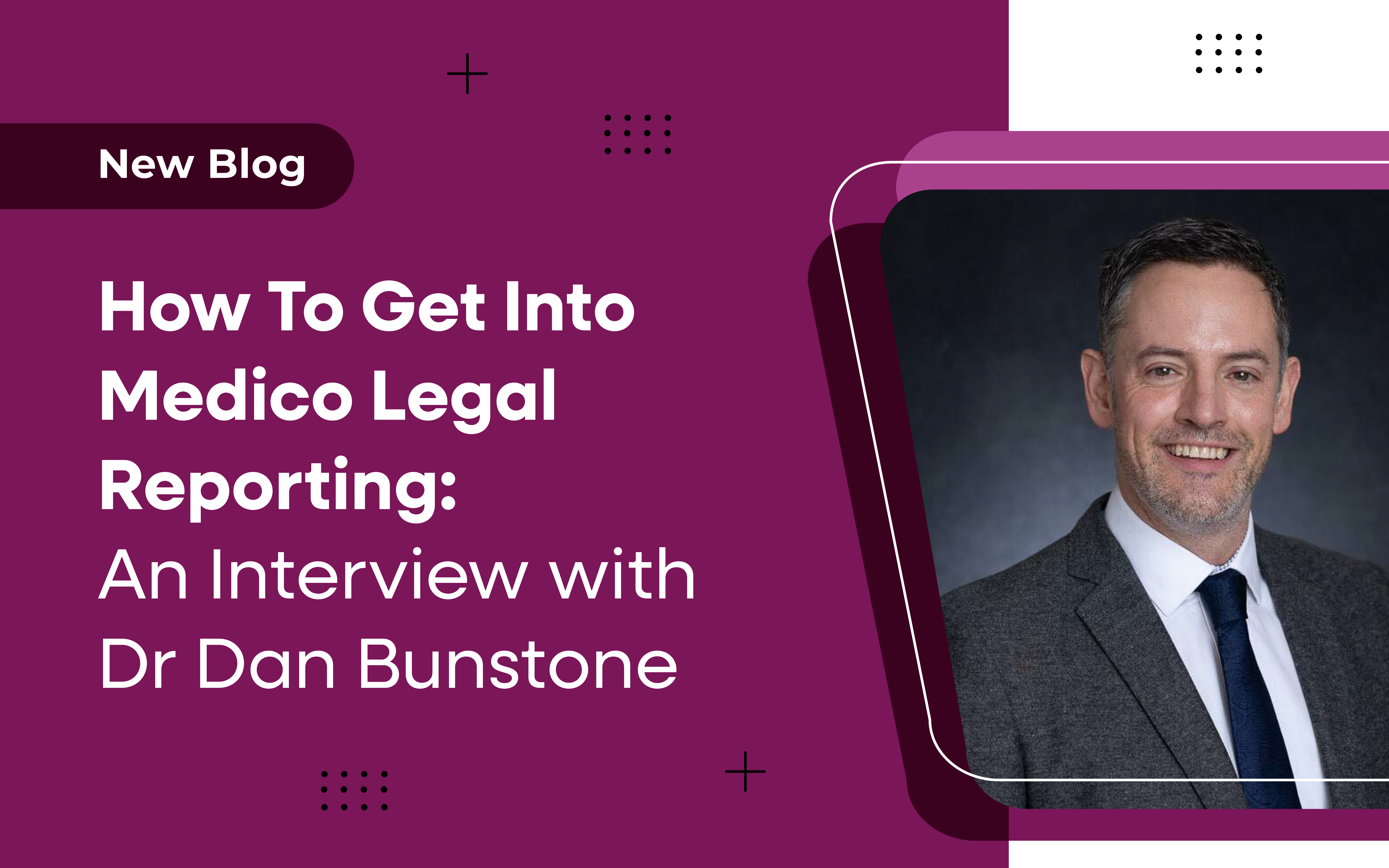
How to get into medico legal reporting: an interview with Dr Dan Bunstone
Medico-legal reporting plays a crucial role in the UK legal system, providing independent medical expert opinions that support fair and informed case outcomes. Acting as a bridge between healthcare and law, these reports are essential in personal injury and clinical negligence claims.
However, for many clinicians, understanding how to get started in medico-legal reporting and what the role of a medical expert witness involves, can feel complex.
In this interview, we speak with Dr Dan Bunstone, Chief Medical Officer at Speed Medical, who brings nearly two decades of experience in medico-legal work. Dr Bunstone shares his insights into what medico-legal reporting involves, how clinicians can take their first steps into the field and what to expect as they build their experience.
What are the first steps a GP or clinician should take if they’re interested in medico-legal reporting?
From a medico-legal perspective, there’s broadly two approaches you’ll need to take. To start completing road traffic assessments, you’ll need to complete your training with MedCo. This will enable you to start receiving instructions and assessing cases with associated injuries.
If you’re looking to do personal injury or negligence work, then you’ll need to do some training on how to write a report and the requirements of an expert. There are a variety of providers out there who can offer this service. Speed Medical offer excellent in-house training and ongoing support too for all expert panel members. Speaking to a friend or colleague who completes this kind of work already is also hugely useful, and you’ll be able to get some real-life advice on what to expect and if this sort of work fits in with your aspirations.
What does medico-legal reporting involve on a day-to-day basis?
Things will tend to start slowly and grow over time. You’ll start receiving case instructions and the first decision you’ll need to make is regarding the day-to-day skills and experience you possess and if you can reasonably be an expert on the case. You should not take on a case if it’s outside your area of expertise as this will inevitably cause problems down the line, and the problems tend to be significant.
Some cases will require you to assess the client in a face-to-face clinic, where others will be a review of the available evidence and comment on the nature of the case. Broadly the day-to-day work will be a combination of clinical assessments or review of medical records to make an expert judgement on the case, with subsequent report writing to detail the case details, what you’ve considered, and your expert opinion. An essential step is carving out the requisite time in the day to commit to the review of the records and authoring of the report. That might seem obvious but in real terms it means blocking out time in your schedule for the work to reasonably fit in.
Are there specific areas of medicine that lend themselves particularly well to medico-legal reporting?
For personal injury work, and certainly road traffic collision type work, then the 5 main clinical areas involved are General Practice, Orthopaedics, Psychiatry, Physiotherapy and Psychology.
Other specialities are involved too, but the main bulk of work is probably covered off with these five. For negligence work, then any speciality can be involved but the areas that seem to have the highest concentration of claims are A&E, Orthopaedics, Obstetrics, General Surgery and Gynaecology.
What are some common misconceptions about medico legal work that you often hear?
I think there is a misconception that when you undertake medico-legal work you will very often be in court. My experience is that this isn’t the case. Attendance at court remains a distinct possibility and you will need to prepare for that as a possibility, but it certainly isn’t an inevitability. Depending on the type of work you complete then the possibility of needing to attend court will vary. I’ve been a number of times as an expert witness and its never as bad as you first might imagine.
What are the most rewarding aspects of being involved in this area of work?
There is real professional challenge completing medico-legal work. It is detailed work and requires a clear understanding not only of the medical aspects associated with the case, but the legal requirements too.
Working through a case from instruction to completion and pulling everything together is a very rewarding part of the role. Often working with a variety of experts across different medical disciplines, sometimes debating different opinions, and working closely with the legal teams is a highlight for me.
And finally, is there anything you wish you had known before starting your medico-legal career?
I’ve been involved with medico-legal work for almost 18 years. Getting started was probably the hardest part. As with any new careers, everything was new, and finding support was often difficult. I wish there had been more practical support and even mentorship to help guid me through the difficult questions and processes that I inevitably encountered along the way.
Much of the learning was experiential, which certainly had its merits, but to enter new situations with a clearer knowledge of expectations would have been beneficial. MedCo and its inherent training didn’t exist back then, so much of the learning had to happen ‘ad hoc’. Being part of Speed Medical very early on really did help support me through the formative years and was a turning point for me.
As Dan highlights, the right guidance and support can make all the difference when getting started.
At Speed Medical, medico-legal reporting is underpinned by a commitment to quality, support and continuous development.
By working closely with a trusted network of medical experts, we ensure every report is accurate, compliant and tailored to the needs of each case
For more information, please visit www.speedmedical.com, contact our team via email at info@speedmedical.com or call us directly on 0330 094 8749.